
Orthopedic Services
Joint pain, swelling, stiffness, and difficulty moving can affect your ability to work, exercise, and enjoy everyday activities. While many joint problems improve with medicines, physiotherapy, rest, and other non-surgical treatments, some conditions may require a closer examination or surgical treatment.
Arthroscopy is a modern minimally invasive procedure that allows an orthopaedic surgeon to examine and, when appropriate, treat problems inside a joint through small openings. At NUHA Hospital, we focus on accurate diagnosis, appropriate treatment planning, and patient-centred care throughout the treatment journey.
For patients looking for an arthroscopy hospital in guntur, understanding what the procedure involves, when it may be recommended, and what recovery can be like can help make treatment decisions more comfortable and informed.
WHAT IS ARTHROSCOPY?
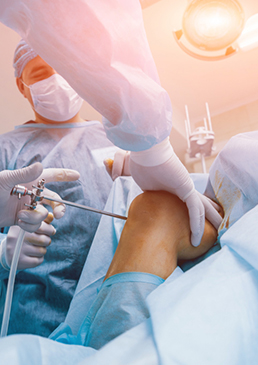
Arthroscopy is a procedure in which a small camera, called an arthroscope, is inserted into a joint through a small incision. The camera sends a magnified view of the inside of the joint to a monitor, allowing the surgeon to examine structures that cannot be seen directly from outside.
If a problem requiring treatment is identified, additional small instruments may be introduced through separate openings. Depending on the condition, the surgeon may repair damaged tissue, remove loose material, smooth an irregular surface, or perform another appropriate procedure.
Because arthroscopy generally uses smaller incisions than traditional open surgery, it may result in less disruption to surrounding tissues. However, it remains a surgical procedure, and the approach and expected recovery depend on the condition being treated.
WHICH JOINTS CAN BE EXAMINED?
Arthroscopy can be performed on several joints. The knee and shoulder are among the joints most commonly treated using this technique. It can also be used in selected conditions involving the hip, ankle, elbow, or wrist.
The specific procedure depends on the location and nature of the problem. For example, knee arthroscopy may be used in selected cases involving cartilage, meniscus, or certain ligament-related problems. Shoulder arthroscopy may be considered for some rotator cuff conditions, instability, or other problems inside or around the joint.
A consultation for arthroscopy in guntur begins with understanding the patient's symptoms and identifying the structure that may be causing the problem.
WHEN MIGHT ARTHROSCOPY BE RECOMMENDED?
Not every joint problem requires arthroscopy. Doctors first consider the patient's symptoms, physical examination, imaging results, previous treatment, and overall health.
Arthroscopy may be considered when a joint problem is causing persistent symptoms and a minimally invasive procedure could appropriately diagnose or treat the condition. In some cases, an MRI or other imaging test provides sufficient information without surgery. In other situations, arthroscopy may be useful when direct inspection or treatment inside the joint is required.
The decision should always be individualised. A procedure that is helpful for one condition may not be appropriate for another.
COMMON PROBLEMS TREATED WITH ARTHROSCOPY
The conditions that can be addressed through arthroscopy vary according to the joint involved. The procedure may be used for selected cartilage, meniscus, ligament, tendon, or joint-surface problems.
Some common examples include:
- Certain meniscus injuries of the knee.
- Selected cartilage injuries or loose fragments within a joint.
- Some shoulder instability conditions.
- Certain rotator cuff problems.
- Joint inflammation or tissue that needs removal for an appropriate diagnosis or treatment.
The suitability of arthroscopy depends on factors such as the severity of the condition, the patient's age and activity level, joint health, and whether non-surgical treatment has already been attempted.
HOW IS ARTHROSCOPY PERFORMED?
Before the procedure, the patient undergoes a medical assessment. The surgeon reviews symptoms, previous treatments, medical conditions, medicines, allergies, and relevant imaging.
Appropriate anaesthesia is provided so that the patient remains comfortable during the operation. A small incision is made near the joint, and the arthroscope is carefully introduced. Sterile fluid may be used to improve visibility inside the joint.
The camera displays an enlarged image on a monitor. If treatment is needed, the surgeon uses specialised instruments through additional small openings. The exact steps depend entirely on the condition being addressed.
After the procedure, the instruments are removed and the small incisions are closed or dressed appropriately. The patient is then monitored during recovery.
BENEFITS OF MINIMALLY INVASIVE JOINT SURGERY
Arthroscopy can provide a useful combination of diagnosis and treatment for appropriately selected joint conditions. Smaller access points may reduce damage to surrounding tissues compared with some traditional surgical approaches.
Potential advantages may include:
- Smaller surgical openings.
- Less disruption to surrounding soft tissue.
- Potentially reduced post-operative discomfort in suitable procedures.
- Earlier movement in selected cases.
- A potentially shorter recovery period compared with certain open operations.
These benefits vary according to the procedure performed and the patient's individual circumstances. Arthroscopy is not automatically better than open surgery for every condition.
PREPARING FOR YOUR PROCEDURE
Preparation begins with a discussion between the patient and the medical team. Patients should provide complete information about existing medical conditions, previous operations, allergies, and all medicines or supplements they take.
Some medicines may need to be adjusted before surgery depending on the patient's health and the type of procedure. The hospital will provide specific instructions about fasting, medicines, investigations, admission, and discharge arrangements.
It can also be helpful to arrange transportation and assistance at home if required. Patients should understand any restrictions that may apply after surgery and prepare accordingly.
RECOVERY AFTER ARTHROSCOPY
Recovery depends strongly on what was found and what treatment was performed. A simple diagnostic procedure may have a different recovery period from a repair of a ligament, tendon, or cartilage structure.
Some patients can return home on the same day, while others may require additional observation depending on the procedure and their medical needs. Temporary swelling, stiffness, or discomfort can occur after surgery.
Physiotherapy may be recommended to restore movement, strength, balance, and joint function. Exercises are introduced progressively according to the type of surgery and the surgeon's instructions.
Patients should avoid rushing their recovery. Returning to sports, heavy work, or demanding physical activity too soon may interfere with healing.
POSSIBLE RISKS AND LIMITATIONS
Although arthroscopy is minimally invasive, it is still surgery and carries potential risks. These can include infection, bleeding, blood clots, nerve or blood-vessel injury, stiffness, swelling, persistent pain, or problems related to the specific repair performed.
There is also no guarantee that surgery will completely eliminate symptoms. Recovery depends on the underlying condition, the extent of tissue damage, general health, rehabilitation, and other individual factors.
An arthroscopy surgeon in guntur should explain the expected benefits, alternatives, limitations, and potential complications before the patient decides to proceed.
CHOOSING THE RIGHT SPECIALIST
Selecting an arthroscopy specialist in guntur is an important part of treatment planning. Patients should look for an orthopaedic professional who takes time to understand the problem and explains whether surgery is genuinely appropriate.
A proper consultation should cover the diagnosis, available non-surgical options, the proposed procedure, expected recovery, rehabilitation, and possible risks. Patients should also feel comfortable asking questions about their treatment.
At NUHA Hospital, we believe informed decision-making is an important part of responsible orthopaedic care.
WHY CHOOSE NUHA HOSPITAL?
For patients considering an arthroscopy doctor in guntur, NUHA Hospital provides an approach centred on evaluation, appropriate treatment selection, surgical care, and recovery support.
Our team recognises that every joint problem is different. Some patients may improve with physiotherapy or other conservative measures, while others may benefit from an arthroscopic procedure. Treatment recommendations are made after considering the individual's condition rather than applying the same approach to everyone.
The hospital environment, surgical support, nursing care, and rehabilitation guidance all contribute to the patient's overall treatment experience.
PERSONALISED ARTHROSCOPIC TREATMENT
An arthroscopy centre in guntur should provide more than access to surgical equipment. Appropriate patient selection, experienced surgical care, safe operating practices, and structured follow-up are all important elements of treatment.
At NUHA Hospital, patients are guided through each stage of their care. The medical team explains the reason for the recommended procedure and discusses realistic expectations for recovery.
For people seeking the orthopedician in guntur, the right choice should be based on clinical expertise, communication, appropriate treatment recommendations, and a commitment to patient care rather than on a title alone.
WHEN SHOULD YOU SEEK MEDICAL ADVICE?
Persistent joint pain should not always be treated as something that must simply be tolerated. If pain, swelling, stiffness, locking, instability, or restricted movement continues despite appropriate care, an orthopaedic evaluation may help identify the underlying cause.
Early assessment can clarify whether further investigations, physiotherapy, medication, activity modification, or surgery may be appropriate. If arthroscopy is being considered, understanding both surgical and non-surgical alternatives is an important part of informed consent.
At NUHA Hospital, our aim is to help patients understand their condition clearly and choose treatment based on their individual needs.
If ongoing joint pain or restricted movement is affecting your everyday life, contact NUHA Hospital today to schedule an orthopaedic consultation and discover the treatment options that may be suitable for you.
Frequently Asked Questions (FAQs)
1. Is arthroscopy a major surgery?
Arthroscopy is generally considered minimally invasive because it uses small openings and specialised instruments. However, it is still a surgical procedure, and its complexity depends on what is being treated.
2. Will I be awake during arthroscopy?
Anaesthesia is used to keep the patient comfortable. The type of anaesthesia depends on the joint, procedure, medical condition, and anaesthetist's assessment.
3. Can arthroscopy diagnose a joint problem?
Yes. The arthroscope provides a direct view of structures inside the joint. However, modern imaging and clinical examination are often used alongside arthroscopy to establish the diagnosis.
4. How quickly can I return to normal activities?
Recovery varies considerably. A straightforward procedure may allow relatively quick recovery, while tissue repair may require several weeks or months before full activity is appropriate.
5. Is physiotherapy necessary after arthroscopy?
It depends on the procedure performed. Physiotherapy is commonly recommended after many arthroscopic operations to help restore movement, strength, and function safely.

