
INTRODUCTION
The shoulder is one of the most mobile joints in the human body. It allows us to reach overhead, lift objects, dress ourselves, comb our hair, and perform many everyday movements. When the shoulder becomes severely damaged, even simple activities can become painful and difficult. Shoulder replacement is a surgical procedure designed to relieve pain and improve the function of a severely damaged shoulder joint.
At Nuha Hospital, we focus on accurate diagnosis, careful treatment planning, appropriate surgical care, and structured rehabilitation to help patients work toward better shoulder function. For patients considering shoulder replacement, understanding the condition and available treatment choices is an important first step.
Surgery is not automatically required for every shoulder problem. A detailed assessment helps determine whether conservative treatment or joint replacement is more appropriate.
UNDERSTANDING THE SHOULDER JOINT
The shoulder is a ball-and-socket joint. The rounded upper end of the upper arm bone, called the humeral head, fits into a shallow part of the shoulder blade known as the glenoid. Smooth cartilage covers these surfaces and helps the bones move comfortably against each other.
The shoulder also depends on muscles and tendons, particularly the rotator cuff, to provide movement and stability. Damage to the cartilage, bones, or supporting structures can interfere with normal shoulder function.
When the joint becomes severely worn or damaged, movement may cause significant pain. Shoulder replacement involves replacing damaged joint surfaces with artificial components. The exact type of replacement depends on the condition of the joint and the surrounding tissues.
WHEN IS SHOULDER REPLACEMENT RECOMMENDED?
Doctors generally consider shoulder replacement when significant joint damage causes persistent pain and loss of function, particularly when other treatments have not provided enough relief.
A patient may find it difficult to raise the arm, reach behind the back, carry objects, or perform routine personal activities. Pain may occur during movement and, in more advanced cases, may also disturb sleep.
Treatment decisions are based on several factors, including the cause and severity of joint damage, symptoms, age, general health, activity requirements, and the condition of the rotator cuff.
For someone searching for a shoulder replacement hospital in guntur, it is important to choose a healthcare facility where diagnosis, surgery, rehabilitation, and follow-up are considered together.
CONDITIONS THAT CAN DAMAGE THE SHOULDER
Severe shoulder arthritis is one of the conditions that may eventually lead to joint replacement. Osteoarthritis can gradually wear down the protective cartilage covering the joint surfaces. Rheumatoid arthritis and other inflammatory conditions can also cause progressive joint damage.
A serious shoulder fracture may damage the joint sufficiently to require replacement, particularly when the bone fragments cannot be repaired effectively. Some patients develop loss of blood supply to the bone, resulting in deterioration of the joint surface.
Long-standing rotator cuff problems can also contribute to a particular type of shoulder arthritis. Because different conditions affect different parts of the shoulder, identifying the underlying problem is essential before selecting a surgical approach.
SYMPTOMS THAT MAY REQUIRE EVALUATION
Shoulder pain is common and does not always mean that replacement is necessary. However, persistent symptoms should be evaluated when they interfere with normal activities or continue despite appropriate treatment.
Some warning signs include:
- Persistent shoulder pain during movement or rest.
- Difficulty lifting or raising the arm.
- Increasing stiffness and reduced range of motion.
- Difficulty performing everyday tasks such as dressing or reaching.
- Pain that affects sleep or limits normal activity.
A proper examination helps distinguish arthritis and joint damage from problems involving muscles, tendons, nerves, or other structures around the shoulder.
TYPES OF SHOULDER REPLACEMENT
There is more than one type of shoulder replacement. The procedure selected depends on the specific problem affecting the joint.
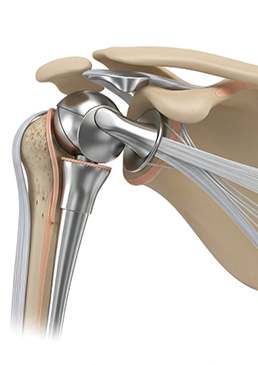
In a conventional shoulder replacement, the damaged ball portion of the joint is replaced with an artificial component, while the damaged socket may also be resurfaced or replaced. This approach may be considered when the rotator cuff and other supporting structures are sufficiently functional.
Reverse shoulder replacement changes the normal arrangement of the artificial joint. The ball and socket components are positioned in the opposite configuration. This can allow other muscles to help move the arm when the rotator cuff is severely damaged and conventional replacement may not provide the desired function.
The choice between these approaches is made after clinical examination and imaging. An implant or technique that is suitable for one patient may not be appropriate for another.
HOW THE PROCEDURE IS PERFORMED
Before surgery, the patient undergoes a detailed assessment. Imaging such as X-rays and, when needed, other scans helps the surgeon understand the condition of the joint and surrounding structures.
During the procedure, the surgeon accesses the shoulder through a carefully planned incision. Damaged areas of the joint are prepared, and the appropriate artificial components are positioned. The surgeon checks the movement and stability of the replacement before closing the wound.
The exact procedure varies according to the patient's anatomy, diagnosis, bone quality, rotator cuff condition, and type of replacement being performed.
An orthopedic doctor in guntur will explain the planned procedure, expected recovery, possible risks, and rehabilitation requirements before surgery.
PREPARING FOR SHOULDER REPLACEMENT
Preparing for surgery involves more than arranging the operation itself. The medical team reviews the patient's general health, existing conditions, medicines, allergies, and previous operations.
Patients should provide complete information about medicines and supplements they are taking. Some medicines may require adjustment before surgery, depending on individual circumstances. The hospital will provide specific instructions about fasting, investigations, medicines, and admission.
It is also useful to prepare the home before returning from hospital. Frequently used items can be placed where they are easy to reach, and family members can assist with household tasks during the early recovery period.
RECOVERY AND REHABILITATION
Recovery after shoulder replacement takes time and requires patience. Physiotherapy is an important part of rehabilitation because the muscles and tissues around the shoulder need time to heal and regain strength.
Initially, movement may be limited and the arm may be supported in a sling. Exercises are introduced gradually under professional guidance. As healing progresses, therapy focuses on improving flexibility, strength, coordination, and functional movement.
Patients should follow the rehabilitation programme provided by their healthcare team. Attempting strenuous movements too early can interfere with recovery.
The speed of recovery varies from person to person. Factors such as age, general health, muscle condition, the reason for surgery, and the type of replacement can influence the rehabilitation process.
BENEFITS AND POSSIBLE RISKS
The main goals of shoulder replacement are pain relief and improved ability to use the arm for appropriate daily activities. Many patients undergo the procedure because pain and stiffness have significantly reduced their quality of life.
However, shoulder replacement is a major operation and does not guarantee completely normal shoulder function. Recovery can take several months, and some limitations may remain depending on the original condition of the joint.
Possible complications include infection, bleeding, blood clots, nerve or blood-vessel injury, stiffness, instability, fracture, implant loosening, or other implant-related problems. The individual risk depends on several factors and should be discussed with the treating surgeon.
CHOOSING THE RIGHT SPECIALIST
Selecting an experienced shoulder replacement specialist in guntur is an important part of the treatment process. Patients should have an opportunity to discuss their diagnosis, available alternatives, expected benefits, potential risks, and rehabilitation plan.
A good consultation should also consider the patient's daily activities and expectations. Someone who needs to perform physically demanding work may have different requirements from someone whose main goal is comfortable movement during everyday activities.
At NUHA Hospital, we encourage patients to ask questions and understand the reasoning behind their recommended treatment.
WHY CHOOSE NUHA HOSPITAL?
Patients searching for the best hospital for shoulder replacement in guntur should consider the complete treatment experience rather than focusing only on the operation.
At NUHA Hospital, our approach brings together assessment, surgical planning, medical support, nursing care, physiotherapy, and follow-up. We aim to make information understandable so patients and their families can participate confidently in treatment decisions.
Our orthopaedic care is focused on selecting appropriate treatment for each individual. When non-surgical care is likely to provide sufficient relief, surgery may not be necessary. When replacement is recommended, careful preparation and rehabilitation form an important part of the overall plan.
PERSONALISED CARE FOR BETTER SHOULDER FUNCTION
A shoulder joint replacement in guntur is not a one-size-fits-all procedure. The shoulder's anatomy, degree of arthritis, bone condition, rotator cuff function, age, activity level, and general health can all affect the treatment plan.
An experienced orthopaedician in guntur evaluates these factors before recommending surgery. Detailed imaging and physical examination help determine which type of replacement may be suitable.
The aim is to develop a realistic treatment plan that addresses the patient's pain and functional limitations while taking safety and long-term recovery into consideration.
WHEN SHOULD YOU SEEK HELP?
Persistent shoulder pain should not simply be accepted as a normal part of ageing. Early evaluation can help identify the cause of the problem and may allow non-surgical treatments to be considered before joint damage becomes severe.
If conservative treatment has failed and significant joint damage is affecting your quality of life, a shoulder replacement doctor in guntur can assess whether joint replacement is appropriate.
At NUHA Hospital, we believe informed patients are better prepared for their treatment journey. Our team takes time to explain the condition, treatment options, surgical process, recovery expectations, and rehabilitation requirements.
If persistent shoulder pain or stiffness is limiting your everyday activities, contact NUHA Hospital today to schedule an orthopaedic consultation and take the next step towards appropriate, personalised care.
Frequently Asked Questions (FAQs)
1. Is shoulder replacement the same as shoulder surgery for a rotator cuff tear?
No. Shoulder replacement is intended to address significant joint damage. A rotator cuff tear may require a different treatment depending on its size, duration, symptoms, and the condition of the shoulder joint.
2. How long does it take to recover from shoulder replacement?
Recovery varies between individuals. Initial healing takes several weeks, while strength and movement can continue improving for several months with appropriate rehabilitation.
3. Will I need physiotherapy after the operation?
Yes, rehabilitation is generally an important part of recovery. A physiotherapist guides exercises designed to gradually restore movement, strength, and function while respecting the healing process.
4. Can I lift heavy objects after shoulder replacement?
Activity restrictions vary depending on the type of replacement and individual recovery. Your surgeon will advise which activities are appropriate and when they can safely be resumed.
5. How do I know whether I need shoulder replacement?
An orthopaedic evaluation is necessary. Your doctor will consider your symptoms, physical examination, imaging, previous treatments, general health, and the extent of joint damage before recommending surgery.

