
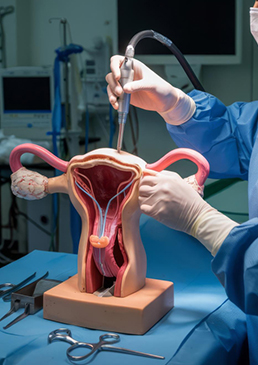
Laparoscopic surgery is a minimally invasive surgical technique that allows doctors to perform many procedures through small cuts rather than one large abdominal incision. It is commonly used in gynaecology and general surgery for treating a range of conditions affecting the abdomen and pelvis.
The procedure uses a thin instrument called a laparoscope. A small camera at its tip provides a magnified view of the internal organs on a monitor, allowing the surgeon to examine and operate with precision.
At NUHA Hospital, laparoscopic procedures are planned according to the patient's diagnosis, medical history, symptoms, and overall health. The aim is to provide appropriate treatment while minimizing unnecessary tissue damage and supporting a safe recovery.
WHAT IS LAPAROSCOPIC SURGERY?
During laparoscopic surgery, the surgeon makes small openings in the abdomen through which specialized instruments are introduced. Carbon dioxide gas is usually used to gently inflate the abdomen, creating enough working space to see and operate on the organs.
The laparoscope transmits images to a high-resolution monitor. The surgeon uses these images to guide the instruments and perform the required procedure.
Unlike traditional open surgery, which may require a larger abdominal incision, laparoscopic surgery generally uses several smaller incisions. The number and location of incisions depend on the operation being performed.
The technique can be used for both diagnostic and treatment purposes. A doctor may recommend laparoscopy when imaging tests have not provided enough information about a pelvic or abdominal problem, or when a minimally invasive operation is appropriate.
Patients searching for gynecologic laparoscopic surgery can undergo an individual evaluation to determine whether this surgical approach is suitable for their condition.
LAPAROSCOPIC SURGERY IN GYNAECOLOGY
Laparoscopy has an important role in modern gynaecological surgery. It can be used to diagnose and treat conditions involving the uterus, ovaries, fallopian tubes, and surrounding pelvic structures.
Depending on the diagnosis, laparoscopic procedures may be considered for conditions such as ovarian cysts, endometriosis, some fibroids, ectopic pregnancy, pelvic adhesions, and certain causes of infertility.
In some cases, laparoscopic hysterectomy may also be performed. This involves removing the uterus through a minimally invasive approach when medically appropriate.
Not every gynaecological condition can or should be treated laparoscopically. The size and location of a condition, previous surgeries, medical history, and the surgeon's assessment all influence the choice of technique.
COMMON PROCEDURES
Laparoscopic surgery can be used for a wide range of procedures. The exact operation depends on the underlying condition and treatment objective.
Common gynaecological procedures may include:
- Removal of selected ovarian cysts.
- Treatment of endometriosis.
- Removal of selected fibroids.
- Treatment of certain ectopic pregnancies.
- Assessment and treatment of pelvic adhesions.
- Laparoscopic hysterectomy in suitable patients.
- Examination of the pelvis during infertility evaluation.
Laparoscopy is also widely used in general surgery. Procedures such as gallbladder removal, appendix surgery, and selected hernia repairs may be performed using minimally invasive techniques.
ADVANTAGES OF LAPAROSCOPIC SURGERY
One of the main advantages of minimally invasive surgery is the use of smaller incisions. This can result in less disruption of the abdominal wall compared with some open procedures.
For appropriately selected patients, potential advantages may include:
- Smaller surgical wounds.
- Less postoperative discomfort in some cases.
- Reduced wound-related problems compared with larger incisions.
- Earlier movement after surgery.
- Shorter hospital stay for many procedures.
- Faster return to normal activities in some patients.
These benefits vary according to the type of operation, the patient's health, and whether complications occur. Laparoscopic surgery is still a surgical procedure and has risks that should be discussed before treatment.
WHEN IS LAPAROSCOPY RECOMMENDED?
The decision to perform laparoscopic surgery is based on the patient's condition rather than simply a preference for minimally invasive treatment.
For example, a woman with persistent pelvic pain may require evaluation for endometriosis or another pelvic condition. A patient with an ovarian cyst may need surgery if the cyst is large, persistent, symptomatic, or has other concerning features.
In infertility care, laparoscopy may sometimes help identify conditions affecting the pelvis, such as endometriosis or adhesions. However, it is not routinely required for every person experiencing difficulty conceiving.
Your gynecology doctor in guntur will consider examination findings, ultrasound or other imaging, symptoms, medical history, and previous treatments before recommending surgery.
PREPARING FOR THE PROCEDURE
Before surgery, the medical team reviews the patient's health and explains the planned procedure. Preoperative tests may include blood investigations, urine testing, imaging, an electrocardiogram, or other assessments depending on age and medical history.
Patients should inform their doctor about all medicines, supplements, allergies, previous operations, and existing medical conditions. Medicines that affect blood clotting may require special instructions before surgery.
The surgical team also explains fasting requirements and when the patient should stop eating and drinking before anaesthesia.
Good preparation helps the medical team identify potential risks and make the procedure as safe as possible.
WHAT HAPPENS DURING LAPAROSCOPIC SURGERY?
Laparoscopic surgery is generally performed under general anaesthesia, meaning the patient is asleep and does not feel the operation.
After anaesthesia is administered, the surgeon creates small openings in the abdomen. Carbon dioxide is introduced to create working space, and the laparoscope is inserted.
Additional small incisions may be made to allow specialized surgical instruments to reach the treatment area. The surgeon performs the planned procedure while viewing the internal structures on a monitor.
Once the operation is complete, the instruments are removed and the small incisions are closed. The carbon dioxide is released, and the patient is transferred to the recovery area.
The duration of surgery varies significantly depending on the procedure and individual circumstances.
RECOVERY AFTER SURGERY
Recovery depends on the type and complexity of the operation. Some laparoscopic procedures may allow the patient to return home on the same day, while others require an overnight or longer hospital stay.
Mild abdominal discomfort, tiredness, bloating, or shoulder-tip discomfort can occur after laparoscopy. Shoulder discomfort can happen because of residual carbon dioxide irritating the diaphragm and is generally temporary.
Patients are encouraged to move around gradually as advised by their healthcare team. Walking can support recovery and help reduce certain postoperative complications.
The surgeon will provide instructions regarding wound care, bathing, physical activity, driving, work, and sexual activity. These recommendations vary according to the procedure.
RISKS AND POSSIBLE COMPLICATIONS
Although laparoscopic surgery is minimally invasive, it is not completely risk-free. Complications can occur with any surgical procedure.
Potential risks include bleeding, infection, blood clots, injury to nearby organs, reactions to anaesthesia, or complications related to the surgical instruments or gas used during the procedure.
In some situations, it may be necessary to convert a laparoscopic operation to open surgery. This decision may be made if the surgeon believes that continuing laparoscopically would not be safe.
The surgeon will explain the specific risks associated with the planned procedure before obtaining consent.
LAPAROSCOPY AND FERTILITY
Laparoscopy can have a role in evaluating and treating certain pelvic conditions associated with infertility. Endometriosis, adhesions, and some abnormalities affecting the reproductive organs can sometimes be identified during the procedure.
In selected cases, treating a pelvic condition during laparoscopy may improve the reproductive environment. However, surgery does not guarantee pregnancy.
Fertility treatment should be individualized based on age, ovarian reserve, sperm factors, fallopian tube status, medical history, and other relevant factors.
Women who are planning pregnancy should discuss their reproductive goals with their doctor before undergoing any pelvic surgery.
CHOOSING A LAPAROSCOPIC SURGEON
The quality of laparoscopic surgery depends on appropriate patient selection, surgical planning, technical expertise, anaesthesia support, and postoperative care.
When choosing the laparoscopic surgeon in Guntur, patients should consider the surgeon's experience with the specific procedure they require rather than relying solely on general claims about laparoscopic expertise.
It is reasonable to ask about the recommended procedure, alternatives, expected recovery, possible complications, and circumstances in which open surgery may be necessary.
A clear discussion before surgery helps patients understand what to expect and make an informed decision.
LAPAROSCOPIC GYNAECOLOGY CARE AT NUHA HOSPITAL
NUHA Hospital provides gynaecological evaluation and minimally invasive surgical care for appropriately selected patients. A gynecology hospital in Guntur should have a coordinated approach involving consultation, preoperative assessment, anaesthesia, surgery, recovery, and follow-up.
Our team evaluates each patient individually before recommending a laparoscopic procedure. The treatment plan takes into account the diagnosis, symptoms, previous operations, reproductive goals, and overall health.
Patients can discuss their concerns openly and understand why a particular surgical technique is being recommended.
WHY MINIMALLY INVASIVE SURGERY MAY BE APPROPRIATE
Laparoscopy can provide surgeons with a detailed magnified view of the abdomen and pelvis while allowing treatment through relatively small openings.
For some patients, this approach can reduce the physical impact of surgery compared with a traditional open procedure. However, the suitability of laparoscopy depends on the condition being treated.
A laparoscopic gynecologist in Guntur can assess whether minimally invasive surgery is appropriate for a woman's particular gynaecological condition.
In some circumstances, open surgery or non-surgical treatment may be safer or more effective. The goal should always be appropriate treatment rather than choosing a technique simply because it is minimally invasive.
FOLLOW-UP AFTER SURGERY
Postoperative follow-up allows the doctor to assess healing and review the results of the procedure. Depending on the operation, laboratory or pathology results may also need to be discussed.
Patients should contact the hospital if they develop persistent fever, increasing abdominal pain, heavy bleeding, difficulty breathing, repeated vomiting, significant wound redness, or discharge from the surgical site.
Following postoperative instructions carefully can help support recovery and identify complications early.
LAPAROSCOPIC CARE AT NUHA HOSPITAL
At NUHA Hospital, laparoscopic procedures are performed only when they are clinically appropriate. The team focuses on accurate diagnosis, careful surgical planning, patient safety, and postoperative support.
Patients looking for a laparoscopic doctor in Guntur can discuss their symptoms and diagnosis with the medical team before deciding whether surgery is required.
Our approach is designed to ensure that patients understand their treatment choices. Where surgery is recommended, the team explains the procedure, preparation, expected recovery, possible risks, and available alternatives.
TAKE THE NEXT STEP TOWARD APPROPRIATE SURGICAL CARE
Laparoscopic surgery has transformed the management of many abdominal and gynaecological conditions by allowing selected procedures to be performed through smaller incisions. However, the technique is not appropriate for every patient or every condition.
A proper medical assessment is the first step toward determining whether laparoscopy is suitable for you.
Book a consultation at NUHA Hospital today to discuss your condition and receive personalized guidance about whether laparoscopic surgery is the right treatment option for you.
Frequently Asked Questions (FAQs)
1. Is laparoscopic surgery safer than open surgery?
Laparoscopic surgery can offer advantages for appropriately selected patients, but it still carries surgical risks. The safest approach depends on the condition, procedure, medical history, and surgeon's assessment.
2. How long does it take to recover after laparoscopy?
Recovery varies according to the operation. Some patients return to normal activities relatively quickly, while more complex procedures require additional recovery time.
3. Will laparoscopic surgery leave scars?
Small scars are usually present where the instruments are inserted. They are generally smaller than the scar associated with many traditional open abdominal operations, although their appearance varies between individuals.
4. Can laparoscopy be used for infertility?
It can be useful in selected cases, particularly when conditions such as endometriosis or pelvic adhesions are suspected. It is not necessary for every infertility evaluation.
5. Can laparoscopic surgery be converted to open surgery?
Yes. If the surgeon encounters circumstances that make continuing with the minimally invasive approach unsafe or unsuitable, conversion to open surgery may be necessary.

