
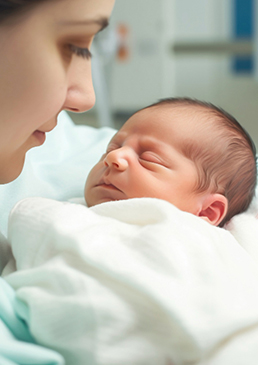
Childbirth is one of the most important moments in a woman's life. While many women hope for a vaginal birth, every pregnancy is different, and the safest method of delivery depends on the health of the mother, the baby's condition, the progress of labour, and other medical factors.
At NUHA Hospital, maternity care is centered on safe delivery, careful monitoring, informed decisions, and emotional support. Our team prepares mothers for both normal and Cesarean delivery and explains the available options throughout pregnancy. The goal is not to promote one method over another, but to choose the safest approach for each mother and baby.
UNDERSTANDING THE TWO MAIN TYPES OF DELIVERY
A vaginal delivery occurs when the baby is born through the birth canal. It is often referred to as normal delivery. Labour usually begins with contractions that gradually help the cervix open. Once the cervix is fully dilated, the mother pushes and the baby is delivered through the vagina.
A Cesarean delivery, commonly called a C-section, is a surgical procedure in which the baby is delivered through an incision made in the mother's abdomen and uterus. It may be planned in advance or become necessary during labour if circumstances change.
Both methods can result in a healthy birth. The appropriate choice should be based on medical assessment rather than pressure to achieve a particular type of delivery.
Women planning delivery at the maternity hospital in Guntur can discuss their pregnancy, preferences, concerns, and possible delivery options with the maternity team.
PREPARING FOR A SAFE DELIVERY
Good delivery care begins well before labour. Regular antenatal appointments allow the healthcare team to monitor the mother's health and the baby's growth and development.
During pregnancy, the doctor may assess blood pressure, blood sugar, haemoglobin, weight, fetal growth, and other important factors. Ultrasound examinations and additional tests may be recommended when necessary.
The mother can also use antenatal visits to discuss labour, pain relief, breastfeeding, newborn care, and what to expect when she comes to the hospital.
Women with conditions such as diabetes, high blood pressure, thyroid disorders, placenta-related problems, or previous Cesarean delivery may need additional monitoring and a carefully planned delivery approach.
VAGINAL DELIVERY
Vaginal delivery is a natural process in which the uterus contracts to help the baby move through the birth canal. Labour is generally divided into stages, beginning with cervical changes and contractions and progressing toward birth and delivery of the placenta.
The duration of labour varies considerably. Some women experience relatively short labour, while others may require more time.
During labour, the mother's vital signs and the baby's wellbeing are monitored. The medical team assesses the progress of labour and responds if concerns arise.
Women searching for vaginal delivery should understand that attempting vaginal birth does not mean that a C-section can never become necessary. A change in the baby's heart rate, slow progress of labour, bleeding, or another concern may require the delivery plan to change.
SUPPORTING NORMAL LABOUR
Many women can have a vaginal birth without major intervention. Good preparation, emotional support, appropriate movement during labour, hydration when permitted, and suitable pain-relief options can help women cope with the birth process.
The healthcare team may suggest different positions or comfort measures depending on the stage of labour and the mother's condition.
Pain relief can be discussed before or during labour. Options may include breathing and relaxation techniques, medicines, or regional anaesthesia such as an epidural where available and medically appropriate.
The mother should be encouraged to ask questions and communicate her preferences. At the same time, the delivery team must continuously consider maternal and fetal safety.
WHEN IS A CESAREAN DELIVERY RECOMMENDED?
A Cesarean delivery may be recommended when vaginal birth could create significant risk for the mother or baby, or when labour is not progressing safely.
Some C-sections are planned before labour, while others are performed after labour has started. The decision depends on the individual circumstances.
Possible reasons can include:
- Certain placenta-related conditions or significant bleeding.
- Some situations involving abnormal fetal position.
- Concerns about the baby's wellbeing.
- Labour that does not progress despite appropriate management.
- Certain maternal medical conditions.
- Previous uterine surgery or Cesarean delivery in selected circumstances.
Not every woman with one of these factors will automatically need surgery. The obstetrician evaluates the complete clinical picture before recommending the safest approach.
UNDERSTANDING C-SECTION DELIVERY
During a Cesarean procedure, anaesthesia is used so that the mother does not feel the surgical pain. A commonly used technique is spinal or regional anaesthesia, which allows the mother to remain awake while the lower part of the body is numbed.
The surgeon makes an incision in the abdomen and then opens the uterus to deliver the baby. After the baby is born, the placenta is delivered and the surgical openings are closed.
The procedure requires careful monitoring of the mother and baby. After delivery, the mother is observed in a recovery area before continuing postpartum care.
Women who require c section delivery in Guntur can discuss the reason for surgery, the expected procedure, recovery, and possible complications with their treating team.
PLANNED AND EMERGENCY CESAREAN DELIVERY
A planned Cesarean is scheduled before labour when the medical team determines that surgery is the safer approach. The timing depends on the pregnancy and the reason for the planned procedure.
An emergency or unplanned Cesarean may become necessary during labour if an unexpected problem develops. For example, the baby's heart rate may show signs of concern, labour may stop progressing, or significant maternal complications may arise.
An unplanned C-section does not necessarily mean that something was done incorrectly earlier in labour. Sometimes the condition of the mother or baby changes quickly, requiring a different delivery approach.
CHOOSING THE RIGHT OBSTETRIC CARE
A supportive and experienced maternity team can help mothers understand their pregnancy and prepare for different possibilities. The role of an obstetrician in Guntur includes monitoring pregnancy, identifying potential risks, managing labour, and making timely decisions when intervention becomes necessary.
Good communication is particularly important when a delivery plan changes. Mothers and families should be given clear information about why a particular recommendation is being made and what to expect next.
RECOVERY AFTER VAGINAL DELIVERY
Recovery after vaginal birth varies from woman to woman. Some mothers feel comfortable moving around relatively soon, while others may experience soreness, tiredness, or discomfort for several days.
Vaginal bleeding after childbirth is normal and gradually decreases. The mother may also experience uterine cramps as the uterus contracts and returns toward its pre-pregnancy size.
Postnatal care includes monitoring bleeding, pain, blood pressure when indicated, breastfeeding, emotional wellbeing, and healing. The mother should report heavy bleeding, fever, severe pain, difficulty breathing, or other concerning symptoms promptly.
RECOVERY AFTER CESAREAN DELIVERY
A C-section is major abdominal surgery, so recovery generally takes longer than recovery from an uncomplicated vaginal birth.
The mother may experience pain around the incision, tiredness, and difficulty moving comfortably during the early recovery period. The healthcare team provides guidance regarding pain relief, wound care, walking, nutrition, breastfeeding, and activity restrictions.
Gradual movement is encouraged when medically appropriate because mobility can support recovery and reduce certain postoperative risks. Heavy lifting and strenuous activity should be avoided until the healthcare team advises that it is safe.
Women should seek medical attention if they develop increasing wound redness or swelling, discharge from the incision, high fever, severe abdominal pain, heavy bleeding, chest pain, or breathing difficulty.
MAKING DELIVERY DECISIONS TOGETHER
The method of delivery should be based on medical circumstances rather than the idea that one type of birth is always better than the other.
A vaginal birth may be appropriate for many women, while a Cesarean may be the safest choice in certain situations. In some cases, the initial plan may change during labour.
The medical team at NUHA Hospital discusses the available options with mothers and families and considers pregnancy history, maternal health, fetal wellbeing, labour progress, and other relevant factors.
A normal delivery hospital in Guntur should be prepared not only to support vaginal births but also to provide timely surgical care when a C-section becomes medically necessary.
PAIN MANAGEMENT DURING LABOUR
Fear of labour pain is common, particularly for first-time mothers. Understanding available pain-management options can help women prepare for childbirth.
Non-medical methods may include breathing exercises, relaxation, movement, massage, supportive companionship, and different labour positions.
Medical pain relief may also be available depending on the hospital's facilities and the mother's clinical circumstances. Regional anaesthesia, including an epidural, can reduce pain while allowing the mother to remain awake.
The choice depends on the mother's preferences, stage of labour, medical condition, and advice from the healthcare team.
CARE AFTER THE BABY IS BORN
Maternity care continues after delivery. The mother and baby are monitored during the immediate postpartum period to ensure that both are stable.
Breastfeeding support can help mothers begin feeding and understand positioning and attachment. The newborn may undergo routine examinations and screening according to standard newborn-care practices.
The mother also receives guidance about nutrition, rest, personal hygiene, wound or perineal care, contraception, and warning signs that require medical attention.
Emotional wellbeing is equally important. Significant sadness, anxiety, hopelessness, or difficulty coping after childbirth should be discussed with a healthcare professional.
WHY CHOOSE NUHA HOSPITAL?
NUHA Hospital provides maternity care designed around the needs of mothers and newborns. From antenatal monitoring through labour, delivery, and postpartum recovery, the team aims to provide clear communication and timely medical support.
Women who need a c section doctor in Guntur can receive an assessment of their individual pregnancy and understand whether surgical delivery is recommended.
The maternity team also supports women planning vaginal birth while remaining prepared to respond if medical circumstances require a change in delivery method.
The focus is on safe childbirth, respectful care, informed decision-making, and appropriate support for both mother and baby.
TAKE THE NEXT STEP TOWARD A SAFE DELIVERY
Whether you are preparing for your first baby or have experienced childbirth before, understanding your delivery options can make the journey less stressful. Regular antenatal care and open communication with your maternity team help ensure that important decisions are made with your health and your baby's wellbeing in mind.
Book your maternity consultation at NUHA Hospital today and receive personalized guidance to prepare for a safe, supported, and well-planned delivery.
Frequently Asked Questions (FAQs)
1. Is vaginal delivery always safer than a C-section?
Neither method is automatically safest for every pregnancy. Vaginal birth is appropriate for many women, while Cesarean delivery may be safer when specific maternal or fetal concerns are present.
2. Can I request a C-section even when there is no medical reason?
A planned C-section involves major surgery and has its own risks. Your obstetrician can discuss your reasons, the potential benefits and risks, and whether it is medically appropriate in your circumstances.
3. Can a planned vaginal birth change into a C-section?
Yes. If complications develop during labour or the baby's wellbeing becomes concerning, the medical team may recommend a Cesarean to protect the mother or baby.
4. How long does recovery after a C-section take?
Recovery varies between individuals. Because a C-section involves abdominal surgery, complete recovery generally takes longer than after an uncomplicated vaginal birth. Your doctor will provide individualized activity and wound-care advice.
5. When should I go to the hospital after labour begins?
Your doctor will provide specific instructions based on your pregnancy and circumstances. Generally, regular strong contractions, leaking or breaking of waters, significant bleeding, reduced fetal movements, or other concerning symptoms require prompt contact with the maternity team.

