
Orthopedic Services
The spine is one of the most important structures in the body. It supports the body, protects the spinal cord, and allows us to stand, bend, twist, and move. Problems affecting the spine can therefore have a significant impact on everyday life. Persistent back pain, neck pain, numbness, weakness, or difficulty walking may interfere with work, sleep, exercise, and independence.
Many spinal conditions can be managed without surgery through medicines, physiotherapy, exercise, lifestyle changes, and other non-surgical treatments. However, when symptoms are severe, persistent, or associated with significant nerve or spinal problems, surgery may sometimes be recommended.
At NUHA Hospital, spinal care begins with a careful assessment of the patient's symptoms and the underlying cause. Surgery is considered only when it is appropriate and when the expected benefits outweigh the potential risks.
For patients exploring spine surgery in guntur, understanding the condition, treatment choices, surgical process, and recovery expectations is an important part of making an informed decision.
UNDERSTANDING THE SPINE
The spine consists of a series of small bones called vertebrae. Between many of these bones are soft structures called discs, which act as cushions and help the spine absorb movement and pressure.
The spinal cord passes through a protected canal formed by the vertebrae. Nerves branch away from the spinal cord through openings in the spine and travel to different parts of the body.
Age-related changes, injuries, disc problems, narrowing of the spinal canal, abnormal movement between vertebrae, and other conditions can affect these structures. When nerves become compressed or irritated, symptoms may extend beyond the back or neck and can include pain, tingling, numbness, or weakness in the arms or legs.
WHEN IS SPINE SURGERY CONSIDERED?
Spine surgery is not the first treatment for every patient with back or neck pain. Many people improve with appropriate non-surgical care. Surgery may be considered when symptoms continue despite suitable conservative treatment or when there is a structural problem that requires surgical correction.
The decision depends on the diagnosis, severity of symptoms, examination findings, imaging results, general health, and impact on daily activities.
A consultation with a spine surgery doctor in guntur can help determine whether surgery is necessary or whether another treatment approach may be more appropriate.
COMMON CONDITIONS THAT MAY REQUIRE SURGERY
Several different conditions can affect the spine. A slipped or herniated disc occurs when part of a spinal disc moves beyond its normal position and may irritate a nearby nerve. This can cause pain, numbness, tingling, or weakness along the affected nerve.
Spinal stenosis occurs when the space available for the spinal cord or nerves becomes narrower. This may cause pain, numbness, weakness, or difficulty walking, particularly in the legs.
Some patients develop instability between vertebrae or a condition called spondylolisthesis, in which one vertebra shifts relative to another. In selected cases, surgery may be required to stabilise the affected part of the spine.
Spinal fractures, deformities, infections, tumours, and certain injuries can also require surgical treatment. The appropriate procedure depends entirely on the underlying condition.
SYMPTOMS THAT SHOULD NOT BE IGNORED
Back or neck pain is common, but persistent or worsening symptoms deserve medical attention. In particular, symptoms affecting nerve function should be evaluated promptly.
Patients should seek medical assessment when they experience:
- Persistent or severe back or neck pain.
- Pain travelling into an arm or leg.
- Numbness or tingling in the limbs.
- Weakness affecting an arm or leg.
- Difficulty walking or maintaining balance.
- Symptoms that significantly interfere with sleep or daily activities.
Sudden severe weakness, loss of bladder or bowel control, or numbness around the inner thighs and genital region can indicate a serious spinal problem requiring urgent medical attention.
TYPES OF SPINE SURGERY
Spinal surgery is not one single procedure. The operation selected depends on the location and cause of the problem.
Discectomy or microdiscectomy may be performed to remove a portion of a damaged disc that is pressing on a nerve. Decompression surgery may be used to create more space for compressed nerves or the spinal cord.
Spinal fusion is another type of operation. It involves joining two or more vertebrae so that they heal into a more stable unit. Screws, rods, cages, or other implants may be used to support the spine while healing occurs.
In appropriate cases, minimally invasive techniques may be used through smaller surgical openings. The choice between conventional and minimally invasive surgery depends on the patient's condition and the surgeon's assessment.
HOW IS THE NEED FOR SURGERY EVALUATED?
Diagnosis begins with a detailed discussion of symptoms and medical history. The doctor also performs a physical and neurological examination to assess movement, muscle strength, sensation, reflexes, and other relevant functions.
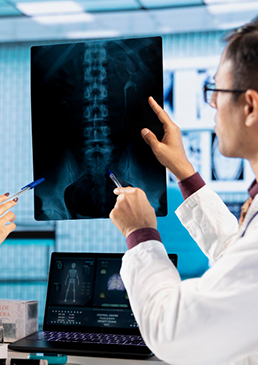
Imaging studies such as X-rays, MRI scans, or CT scans may be recommended. These tests provide information about bones, discs, nerves, and other spinal structures.
Importantly, an abnormal scan does not automatically mean that surgery is necessary. Imaging findings need to be considered alongside the patient's symptoms and examination. The aim is to identify whether the structural problem actually explains the patient's difficulties.
A spine specialist in guntur can help patients understand these findings and determine the most appropriate next step.
PREPARING FOR SPINE SURGERY
Once surgery is recommended, preparation involves several steps. The medical team reviews the patient's general health, existing medical conditions, previous operations, allergies, and medicines.
Patients should provide accurate information about all prescription medicines, over-the-counter medicines, and supplements they take. Certain medicines may need to be adjusted before surgery according to individual circumstances.
Pre-operative tests may be performed to assess fitness for anaesthesia and surgery. Patients also receive instructions about fasting, medicines, admission, and other preparations.
Planning for the recovery period is equally important. Depending on the procedure, patients may need temporary assistance with household tasks, mobility, or personal activities.
WHAT HAPPENS DURING SURGERY?
The details of spinal surgery vary considerably depending on the diagnosis and procedure. Anaesthesia is provided to keep the patient comfortable during the operation.
The surgeon accesses the affected part of the spine and addresses the problem identified during pre-operative planning. This may involve removing pressure from a nerve, removing damaged disc material, correcting instability, or stabilising the spine.
When implants are needed, they are positioned carefully to support the intended correction or fusion. The surgical wound is then closed and the patient is transferred to the recovery area for monitoring.
The surgical team takes appropriate precautions throughout the procedure to protect the spinal cord, nerves, surrounding tissues, and other important structures.
RECOVERY AND REHABILITATION
Recovery after spinal surgery depends on the type and extent of the procedure. A patient undergoing a relatively small decompression may have a different recovery experience from someone undergoing a spinal fusion.
Early movement is often encouraged when medically appropriate. Physiotherapy may be recommended to improve strength, flexibility, posture, balance, and safe movement.
Patients should follow their surgeon's instructions regarding lifting, bending, driving, work, exercise, and other activities. Recovery should be gradual, even if pain improves quickly.
The body's healing process continues after discharge from hospital. Follow-up appointments allow the medical team to assess progress and address any concerns.
BENEFITS AND POSSIBLE RISKS
The main goals of spinal surgery are to address the underlying structural problem, relieve pressure on affected nerves when appropriate, improve stability, or correct a specific spinal condition. The expected outcome depends on the diagnosis and the procedure performed.
Like all major operations, spinal surgery carries potential risks. These may include infection, bleeding, blood clots, nerve injury, spinal fluid leakage, persistent pain, problems involving implants, or the need for additional treatment.
The risks vary significantly between procedures and patients. A best spine surgeon in Guntur should explain the expected benefits, alternatives, potential complications, and likely recovery before surgery.
CHOOSING THE RIGHT SPECIALIST
Choosing the best orthopedic surgeon in guntur is an important decision. Patients should look for a specialist who carefully evaluates the condition rather than recommending surgery based solely on an imaging report.
A good consultation should provide clear answers about the diagnosis, available treatment options, reasons for recommending surgery, expected recovery, and possible risks.
Patients should also feel comfortable asking whether non-surgical treatment remains a reasonable option. In some cases, a second opinion can be useful when the diagnosis or treatment decision is complex.
WHY CHOOSE NUHA HOSPITAL?
Patients looking for a best spine surgery hospital in guntur should consider the complete treatment pathway rather than focusing only on the operation itself.
At NUHA Hospital, we believe effective spinal care involves accurate diagnosis, appropriate treatment planning, surgical expertise when required, nursing support, rehabilitation, and follow-up.
Our approach is centred on helping patients understand their condition in simple language. We discuss available treatment choices and realistic expectations so that patients and families can participate meaningfully in decisions about care.
When surgery is not necessary, appropriate non-surgical treatment can be considered. When an operation is recommended, careful preparation and rehabilitation are treated as important parts of the overall process.
PERSONALISED SPINE CARE
Every spinal condition is different. Two people may have similar findings on an imaging scan but experience very different symptoms and require different treatment approaches.
A best ortho doctor in guntur should consider the patient's age, general health, occupation, physical activity, symptoms, neurological findings, imaging, and personal goals before recommending treatment.
At NUHA Hospital, we aim to develop an individualised plan that is medically appropriate and realistic. Patients are encouraged to discuss their concerns and expectations openly so that the treatment plan can be understood clearly.
RETURNING TO EVERYDAY LIFE
The goal of treatment is not simply to complete a surgical procedure. It is to help the patient recover safely and return to appropriate daily activities.
The timeline varies depending on the surgery. Some patients may resume basic activities relatively soon, while procedures involving spinal fusion or more extensive correction may require a longer recovery period.
Patients should gradually increase activity according to professional guidance. Good posture, appropriate exercises, healthy body weight, and safe movement habits may also support long-term spinal health.
WHEN SHOULD YOU SEEK HELP?
Persistent back or neck pain should not automatically be assumed to require surgery. However, symptoms that continue despite appropriate treatment or signs of nerve involvement should be properly assessed.
If you are experiencing ongoing pain, numbness, weakness, difficulty walking, or other concerning symptoms, an orthopaedic or spinal evaluation can help identify the cause and determine the appropriate treatment.
At NUHA Hospital, our goal is to provide responsible, patient-centred care while helping individuals understand both surgical and non-surgical options.
If persistent back or neck problems are affecting your mobility, comfort, or quality of life, contact NUHA Hospital today to schedule a ortho specialist consultation and take the next step towards appropriate spinal care.
Frequently Asked Questions (FAQs)
1. Does every patient with back pain need surgery?
No. Many causes of back pain can be treated without an operation. Surgery is considered only when the diagnosis and symptoms indicate that it is likely to provide meaningful benefit.
2. How do I know whether my spinal problem is serious?
Persistent severe pain, progressive weakness, significant numbness, difficulty walking, or changes in bladder or bowel control require medical assessment. Some symptoms may require urgent attention.
3. How long does recovery take after spine surgery?
Recovery depends on the specific operation, the patient's health, and the underlying condition. Minor procedures may have a shorter recovery period, while fusion and complex surgeries generally require more time.
4. Will I need physiotherapy after surgery?
Physiotherapy is often an important part of recovery. The programme is tailored to the procedure and focuses on safe movement, strength, flexibility, posture, and functional recovery.
5. Can spine surgery completely eliminate pain?
The outcome depends on the cause of the pain and the procedure performed. Surgery aims to address an identifiable spinal problem, but complete elimination of pain cannot be guaranteed in every patient.

