
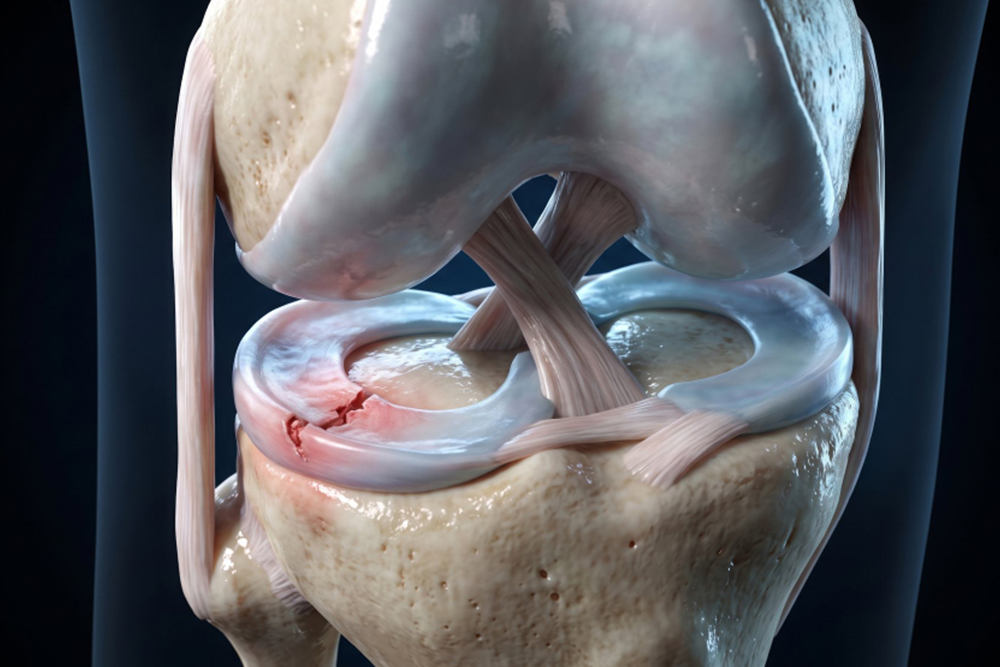
Knee pain can make everyday activities such as walking, climbing stairs, squatting, or getting up from a chair difficult. One common cause of knee discomfort, particularly among people who play sports or perform activities involving repeated knee movements, is a meniscus tear.
The meniscus is a piece of strong, flexible cartilage that acts as a cushion between the thigh bone and shin bone. Each knee has two menisci that help absorb shock, distribute body weight, and provide stability to the joint. When this cartilage gets damaged or torn, it can cause pain, swelling, stiffness, and difficulty moving the knee.
A meniscus tear can happen suddenly due to an injury or develop gradually because of age-related changes. Understanding its causes, symptoms, and treatment options can help patients seek timely medical care and prevent further knee problems.
WHAT IS A MENISCUS TEAR?
A meniscus tear occurs when the cartilage inside the knee becomes damaged. This commonly happens when the knee twists suddenly while the foot remains firmly planted on the ground. Sports such as football, basketball, cricket, and badminton can increase the risk of this type of injury.
However, meniscus tears are not limited to athletes. Everyday movements such as squatting, kneeling, or suddenly turning while walking can also cause a tear, particularly in older adults whose cartilage may have become weaker over time.
Articles List
- ACL Surgery in Guntur: When a Torn ACL Needs Reconstruction, Recovery and Cost
- Normal Delivery vs C-Section: Which Is Better, and Who Decides?
- PCOS vs PCOD Symptoms, Causes and Key Differences
- Lung Cancer Early Symptoms, Diagnosis and Treatment options
- Frozen Shoulder Causes, Stages, Symptoms and Treatment
- Pneumonia Types, Symptoms and Treatment Options
- Migraine
- Pregnancy After 35 Risks, Precautions and Medical Care
- Seizures types, causes and when to seek Emergency Care
- Hip Replacement Cost in Guntur
- Knee Replacement Surgery in Guntur
- UTI Antibiotics: Why a Doctor's Prescription Matters
- Non Surgical Vaginal Rejuvenation or Vaginal tightening
Depending on the location and severity of the injury, a tear may cause mild discomfort or significant difficulty with knee movement. Consulting an experienced Orthopedist in guntur can help identify the injury and determine the most suitable treatment approach.
WHAT CAUSES A MENISCUS TEAR?
Meniscus injuries can occur due to sudden trauma or gradual wear and tear. The main causes include:
- Sudden twisting movements: Rotating the knee while the foot remains fixed can place excessive pressure on the meniscus.
- Sports-related injuries: Activities involving running, jumping, sudden stops, and direction changes can increase the risk of cartilage damage.
- Age-related degeneration: As people grow older, the meniscus may become less flexible and more vulnerable to tearing.
- Deep squatting: Repeatedly bending the knee deeply or lifting heavy objects in a squatting position may contribute to injury.
- Previous knee injuries: Earlier damage to the knee structures may affect joint stability and increase the possibility of further problems.
Sometimes, a person may not remember a specific injury because the tear develops gradually through repeated stress.
COMMON SYMPTOMS OF A MENISCUS TEAR
Symptoms depend on the size, location, and type of tear. Some patients experience immediate pain following an injury, while others notice discomfort developing over several days.
The most common symptoms include:
- Knee pain: Pain may occur along the inner or outer side of the knee, particularly while twisting or bending.
- Swelling: The knee may become swollen within a few hours or over the following days.
- Stiffness: Bending or straightening the knee may become difficult.
- Locking sensation: A torn piece of cartilage may interfere with normal joint movement, making the knee feel stuck.
- Clicking or popping: Some patients notice clicking sounds or sensations when moving the knee.
- Difficulty walking: Pain and instability may make it uncomfortable to stand, walk, or climb stairs.
A knee that suddenly becomes locked or cannot bear weight requires prompt medical assessment. Early evaluation can help prevent further damage and identify the appropriate treatment.
TYPES OF MENISCUS TEARS
Meniscus tears are classified according to their shape and location. Understanding the type of tear helps doctors decide whether it can heal naturally, requires rehabilitation, or needs surgery.
Some common types include:
Horizontal tear: This occurs when the cartilage splits along its length, creating an upper and lower portion.
Vertical tear: The tear runs from the inner edge towards the outer part of the meniscus.
Radial tear: This develops from the inner edge towards the outer edge and may affect the meniscus's ability to distribute weight.
Bucket-handle tear: A larger vertical tear causes a portion of the cartilage to move into the centre of the knee joint. This can sometimes result in knee locking.
Complex tear: This involves multiple tear patterns and is more commonly associated with age-related cartilage degeneration.
HOW IS A MENISCUS TEAR DIAGNOSED?
Accurate diagnosis is essential for choosing the right treatment. The doctor generally begins by discussing the patient's symptoms, injury history, and physical activities.
During the examination, the knee is checked for swelling, tenderness, range of motion, and stability. Special movement tests may be performed to identify possible meniscus damage.
Imaging investigations may also be recommended. X-rays help rule out bone injuries and arthritis, although they do not directly show meniscus tears. An MRI scan provides detailed images of the cartilage and other soft tissues inside the knee.
Patients seeking Knee injuries treatment in guntur should consider a detailed evaluation rather than relying only on symptoms, as ligament injuries and other knee conditions can produce similar complaints.
TREATMENT OPTIONS FOR A MENISCUS TEAR
Treatment depends on several factors, including the patient's age, activity level, severity of the tear, location of the damage, and presence of other knee injuries. Not every meniscus tear requires surgery. Many patients improve with appropriate non-surgical care.
Rest and Activity Modification
During the initial phase, avoiding activities that increase knee pain can help reduce irritation. Patients may be advised to temporarily avoid running, jumping, deep squatting, and sudden twisting movements. Applying ice to the affected area for short periods may help control swelling. A knee brace or crutches may also be recommended in selected cases to provide support.
Medications
Doctors may prescribe suitable pain-relieving or anti-inflammatory medicines to manage discomfort and swelling. The choice of medication depends on the patient's overall health and medical history. Patients should avoid self-medication, especially if they have kidney disease, stomach problems, or other existing medical conditions.
Physiotherapy
Physiotherapy is an important part of meniscus tear recovery. A structured exercise programme helps strengthen the muscles surrounding the knee, improve flexibility, and restore normal movement. Exercises may focus on the quadriceps, hamstrings, and hip muscles. These muscles support the knee joint and help improve stability during everyday activities.
Arthroscopic Surgery
When symptoms persist or the injury causes significant mechanical problems, surgery may be considered. Arthroscopy is a minimally invasive procedure in which a small camera and specialised instruments are inserted through tiny openings around the knee.
Depending on the injury, the surgeon may recommend:
Meniscus repair: The torn cartilage is stitched together to encourage healing. This option is preferred when the tear is in an area with a good blood supply and has the potential to heal.
Partial meniscectomy: The damaged portion of the meniscus is carefully removed while preserving as much healthy cartilage as possible.
The decision depends on the tear pattern, location, and likelihood of successful healing. Preserving the meniscus whenever possible is important because it plays a protective role in the knee joint. An experienced Orthopedic surgeon in Guntur can evaluate the injury and explain whether surgery or conservative treatment is more appropriate.
RECOVERY AND REHABILITATION AFTER A MENISCUS TEAR
Recovery time varies depending on the severity of the injury and the treatment performed. Patients managed without surgery may improve over several weeks, although degenerative tears can take longer to settle. Following meniscus repair, recovery generally takes longer because the cartilage needs time to heal. Rehabilitation may involve temporary restrictions on weight-bearing, gradual exercises, and a supervised return to normal activities.
Patients should follow their rehabilitation plan carefully and avoid returning to sports or strenuous activities before receiving medical clearance.
CAN MENISCUS TEARS BE PREVENTED?
Although not all knee injuries can be prevented, certain habits may help reduce the risk of cartilage damage. Regular strengthening exercises, proper warm-ups before sports, maintaining a healthy body weight, and using appropriate footwear can support knee health. Avoiding sudden twisting movements and using correct techniques while lifting heavy objects may also reduce unnecessary stress on the joint.
People who experience recurring knee pain or swelling should seek medical advice instead of continuing activities that worsen their symptoms.
CHOOSING THE RIGHT ORTHOPEDIC CARE
Choosing the right specialist is important for effective diagnosis, treatment, and rehabilitation. Patients should look for a hospital with access to appropriate imaging, experienced specialists, and physiotherapy support.
At NUHA Hospital, patients can seek evaluation and treatment guidance for different bone, joint, and sports-related injuries. The Orthopaedic doctors in guntur can help assess knee problems and recommend treatment based on individual needs.
Patients may consult Dr. Shaik Nawazish Rabbani for expert evaluation of orthopedic conditions, including knee injuries and joint-related concerns.
An experienced Joint replacement doctor in Guntur can also assess patients who have associated advanced knee arthritis or significant joint damage requiring specialised treatment.
GET EXPERT CARE FOR YOUR KNEE PAIN AT NUHA HOSPITAL
A meniscus tear should not be ignored, especially when knee pain, swelling, or restricted movement interferes with daily life. Early diagnosis and appropriate treatment can help protect knee function and support a safe return to normal activities. Choosing a well-equipped Orthopedic hospital in guntur can help patients access proper diagnosis, specialised treatment, and rehabilitation services under one roof. Consult the orthopedic team at NUHA Hospital for a proper assessment and personalised treatment plan.
Book your appointment today and take the first step towards healthier, stronger knees.
Frequently Asked Questions (FAQs)
1. Can a meniscus tear heal on its own?
Some small tears, particularly those in the outer portion of the meniscus where blood supply is better, may heal with appropriate care. Other tears may improve symptomatically with physiotherapy and activity modification, even if the cartilage does not completely heal.
2. Can I walk with a meniscus tear?
Some people can walk with a meniscus tear, particularly when the injury is mild. However, walking may cause pain or swelling. Avoid activities that worsen symptoms and follow your doctor's advice.
3. Is surgery always necessary for a meniscus tear?
No. Many meniscus tears can be managed without surgery through rest, medication, and physiotherapy. Surgery may be recommended when symptoms persist or when the tear causes significant mechanical problems.
4. How long does it take to recover from a meniscus tear?
Recovery depends on the type and severity of the tear. Non-surgical treatment may take several weeks or longer, while recovery after surgical repair can take several months.
5. What happens if a meniscus tear is left untreated?
Some tears may remain stable, but others can cause persistent pain, swelling, stiffness, or restricted movement. Certain injuries may also contribute to further cartilage damage. Medical evaluation helps determine whether treatment is necessary.